Expert articles on custom formulation, regulatory trends, private label manufacturing, and global cosmetic innovations.
Choosing a Private Label Diaper Rash Cream supplier requires more than comparing prices and logo options. The formula touches a baby’s sensitive skin, so quality decisions deserve careful attention. Experienced buyers examine ingredients, manufacturing controls, testing records, and product consistency before placing an order. A polished website proves very little.
Start by reviewing the supplier’s formulation expertise. Ask whether the cream has been designed for newborns, sensitive skin, or everyday barrier protection. Request a complete ingredient list, product specifications, stability information, and relevant safety documentation. Clear answers matter. Vague promises should raise questions.
Samples can reveal important details. Check the cream’s texture, scent, spreadability, absorption, and packaging performance. Test the tube or jar after repeated opening. Does the cap stay clean? Does the label remain readable near a changing table? These small details influence customer trust. Manufacturing certifications, batch records, quality inspections, and traceability systems also deserve close review. Requirements may differ between markets, so professional regulatory guidance remains valuable.
Pricing still matters, but the cheapest quote may hide higher costs later. Small minimum orders, flexible packaging, reliable lead times, and responsive communication can support a safer launch. Ask how the supplier handles formula changes, complaints, damaged goods, and delayed shipments. No checklist is perfect. A supplier may meet every document requirement yet communicate poorly. That weakness can become expensive. The strongest partnership combines technical competence, transparent evidence, practical experience, and a willingness to improve when something is not working.
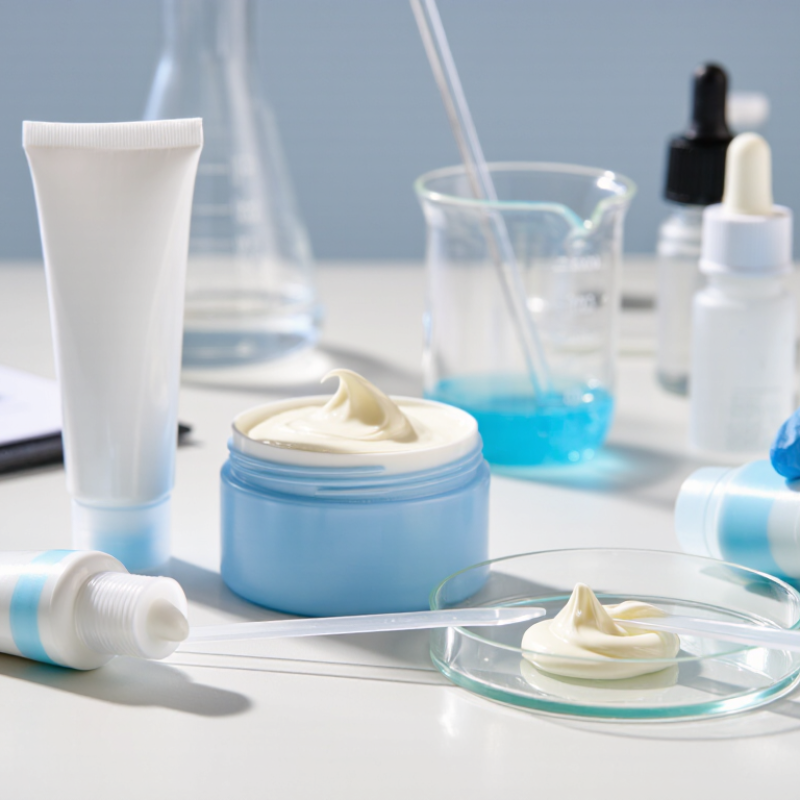
Define Your Private Label Diaper Rash Cream Requirements
Start with the infant’s real routine, not a trendy formula claim. Grand View Research reported that the global baby care products market is projected to grow at over 5% annually through 2030. This growth rewards clear positioning, but it also increases competition. Decide whether your cream is for daily prevention, visible irritation, or both. Specify the preferred barrier ingredients, such as zinc oxide or petrolatum, and set limits for fragrance, essential oils, allergens, and preservatives. Keep the texture practical: a cream that spreads easily on a warm, damp diaper area is more useful than a thick product that clumps.
Your supplier brief should include target age, package size, dosage guidance, shelf life, and production volume. The U.S. FDA’s OTC Monograph M016 identifies permitted active ingredients and concentration ranges for skin protectants. Requirements must match the intended sales market. Ask for stability data, microbial testing, raw-material specifications, batch records, and independent safety assessments. Do not accept “clinically tested” without study details.
Packaging needs equal attention. A 50-gram tube may suit travel, while a pump can reduce finger contact. Check whether the closure works with one hand. Small details matter.
I would not promise “instant relief” without strong evidence. That mistake can weaken trust. Suppliers should provide certificates, sample batches, and transparent change-control procedures before signing a private-label agreement.
How to Choose a Private Label Diaper Rash Cream Supplier?
Supplier expertise should appear in practical details, not polished sales language. Ask how long the team has formulated diaper care products and which skin types guided development. Experienced suppliers can explain ingredient functions, texture choices, pH targets, and preservative systems clearly. Vague answers deserve caution.
Review every certification carefully. Check the issuing organization, expiration date, covered facility, and certification scope. A certificate for manufacturing may not cover product testing or storage. Request recent certificates, batch records, raw material specifications, and certificates of analysis. Documentation matters.
Product safety requires more than a gentle label. Ask for stability, microbiological, preservative-effectiveness, and skin-safety testing. Confirm that fragrance, allergens, contaminants, and packaging interactions receive proper evaluation. The supplier should explain testing methods and acceptance limits without hiding behind technical terms. Samples should be inspected after heat, cold, and repeated opening. Small details reveal weak controls.
A strong partner also maintains traceability from raw material to finished batch. Production areas should follow suitable quality systems and hygienic manufacturing practices. Facilities need documented cleaning, staff training, deviation handling, and complaint procedures. Ask how a failed batch is isolated. Ask who approves release.
Do not rely on one successful sample. Real performance may change after scale-up. That possibility is easy to underestimate. Compare pilot and production samples for odor, color, spreadability, and separation. A supplier may look reliable, yet incomplete records can expose gaps. Careful review protects a baby’s sensitive skin and the credibility of the finished product.
Suggested screening weights for evaluating supplier expertise, certifications, documentation, and product safety before private-label production.
Use these weights as a practical screening framework. Confirm applicable regulations, certification validity, ingredient compliance, testing records, and manufacturing controls for the target market.
Choosing a private label diaper rash cream supplier requires more than comparing unit prices. A clinical review reports diaper dermatitis affects roughly 7% to 35% of infants, so formula performance matters. Ask for the complete ingredient list, stability data, microbial testing, and irritation testing. Zinc oxide is widely used, but concentration alone does not prove better protection. In the United States, the OTC skin protectant monograph permits zinc oxide from 1% to 25%. Requirements may differ elsewhere.
Compare practical ingredients carefully. Fragrance-free formulas may suit sensitive skin, while petrolatum, dimethicone, panthenol, or botanical extracts create different textures and positioning. Request batch samples, not only laboratory descriptions. Spread a small amount on a gloved hand. Check whitening, stickiness, odor, and removal with warm water. Real use exposes weaknesses.
Packaging also affects quality. Tubes support controlled dosing and lower handling, while jars may feel premium but increase finger contact. Airless packs can improve hygiene, though they often raise costs and minimum order quantities. Grand View Research projects continued growth in the global baby skincare market through 2030, increasing pressure for clear differentiation. Discuss fill weights, recycled-content options, artwork support, and packaging compatibility with your supplier. Claims such as “hypoallergenic” or “natural” need evidence and market-specific review. I would not select the thickest cream automatically. A formula that looks impressive may spread poorly, stain fabric, or fail during temperature testing. Supplier transparency matters more than polished sales language.
| Evaluation Dimension | Profile A: Standard Zinc Oxide Cream | Profile B: Sensitive-Skin Barrier Cream | Profile C: Botanical Positioning Cream | Profile D: Premium Airless Cream |
|---|---|---|---|---|
| Typical Product Positioning | Mass-market daily diaper-area protection | Fragrance-free care for sensitive or newborn skin | Plant-based marketing with a mild protective profile | High-end, hygienic, premium skincare presentation |
| Core Barrier Ingredients | Zinc oxide Petrolatum Mineral oil | Zinc oxide Petrolatum Dimethicone | Zinc oxide Sunflower oil Beeswax | Dimethicone Zinc oxide Squalane |
| Common Supporting Ingredients | Glycerin, panthenol, and skin-conditioning emollients | Glycerin, panthenol, allantoin, and low-irritation emollients | Calendula extract, oat extract, aloe vera, and tocopherol | Panthenol, ceramides, hyaluronic acid, and tocopherol |
| Fragrance and Essential Oils | Usually available with or without fragrance | Preferably fragrance-free and essential-oil-free | May contain natural fragrance or essential oils; irritation testing is important | Usually fragrance-free for a clean, dermatologist-oriented position |
| Zinc Oxide Level | Commonly offered from approximately 10% to 40% | Commonly offered from approximately 10% to 25% | Commonly offered from approximately 10% to 20% | Commonly offered from approximately 10% to 25% |
| Texture and Application | Thick, opaque, protective, and suitable for overnight use | Soft, spreadable, and designed to reduce rubbing during application | Medium-rich texture with a natural oil feel | Light-to-medium texture with controlled, clean dispensing |
| Preservation Approach | Conventional cosmetic preservation system may be used | Low-irritation preservative system supported by challenge testing | Preservative system must be validated because “natural” does not mean self-preserving | Airless packaging can reduce repeated exposure, but preservation testing is still required |
| Recommended Primary Packaging | 30–100 g laminated tube or polypropylene jar | 30–75 g laminated tube with a flip-top cap | 50–100 g recyclable tube or aluminum tube | 30–75 g airless pump or premium laminated tube |
| Packaging Advantages | Low packaging cost, familiar format, and easy retail merchandising | Convenient one-hand use and reduced contact with the remaining product | Supports natural, recyclable, or plastic-reduction claims when verified | Improved dose control, premium appearance, and reduced product back-contamination |
| Customization Options | Formula fragrance, zinc oxide level, tube color, label, carton, and cap color | Fragrance-free formula, allergen-minimization brief, tube size, cap, and artwork | Botanical blend, natural-origin target, packaging materials, and certification pathway | Texture, active combination, airless actuator, decoration, carton, and gift-ready finish |
| Typical Testing to Request | Stability, microbiological limits, preservative challenge test, and packaging compatibility | Stability, microbiological limits, preservative challenge test, irritation or patch testing, and packaging compatibility | Stability, microbiological limits, preservative challenge test, botanical identity, allergen review, and irritation testing | Stability, microbiological limits, preservative challenge test, pump-function testing, dose uniformity, and compatibility testing |
| Regulatory Documentation | Full ingredient list, specifications, batch records, safety documentation, and market-specific labeling review | Full ingredient list, safety assessment, testing reports, allergen statement, and market-specific labeling review | Ingredient origin records, botanical specifications, safety assessment, claims substantiation, and market-specific labeling review | Safety assessment, specifications, testing reports, packaging documentation, claims substantiation, and market-specific labeling review |
| Best Fit for | High-volume retail, value pricing, and broad consumer distribution | Newborn, sensitive-skin, pharmacy, and dermatologist-oriented channels | Natural-product, eco-conscious, and specialty retail channels | Premium baby-care, subscription, boutique, and gift-oriented channels |
| Relative Cost Level | ★★☆☆☆ Lower | ★★★☆☆ Moderate | ★★★☆☆ Moderate to higher | ★★★★☆ Higher |
| Key Supplier Questions | Can the supplier provide different zinc oxide levels, consistent viscosity, and packaging compatibility data? | Can the supplier support fragrance-free development, irritation testing, and newborn-oriented claims? | Can the supplier verify botanical identity, natural-origin percentages, allergens, and sustainability claims? | Can the supplier validate airless performance, dose consistency, decoration quality, and long-term stability? |
How to Choose a Private Label Diaper Rash Cream Supplier?
Minimum order quantity should match your sales evidence, not your optimism. A supplier may quote 1,000 units, but packaging, testing, and artwork can create separate minimums. Ask whether the MOQ applies per formula, scent, size, or total order. The 2024 Global State of Logistics report highlights continuing cost pressure across transport networks. Therefore, compare the full landed cost, including samples, testing, cartons, duties, and storage. A low factory price can become expensive quickly. A spreadsheet can still lie.
Request a written production timeline with approval, filling, quality checks, and release dates. For an initial order, 30–60 production days is a practical planning range, but formula changes may extend it. Ask for batch records, stability evidence, microbial testing, ingredient specifications, and a certificate of analysis. Suppliers should also explain their quality system and complaint process. My own mistake would be trusting a promised ship date without defining “ready.” It may mean finished goods, not loaded cargo.
Shipping deserves equal attention. UNCTAD’s Review of Maritime Transport reports that ships carry over 80% of global merchandise trade by volume, yet port congestion can still disrupt schedules. Compare air, sea, and courier options using realistic carton dimensions. Require shipment tracking, insurance terms, and responsibility for damaged goods. Confirm that product claims and labels meet the destination market’s requirements. An attractive quote means little without documented controls.
A reliable supplier should provide full samples before commercial discussions move too far. Test the cream on different diaper materials and skin-safe testing panels. Check texture, absorption, scent, color, and container performance after several days. Ask for ingredient specifications, batch records, stability data, and microbial testing results. A smooth sample is not enough. Production consistency matters more.
Quality control should cover raw materials, filling, sealing, labeling, and final inspection. During supplier reviews, request clear acceptance standards and traceable records. Communication also deserves practical testing. Send detailed questions and observe response time, technical accuracy, and willingness to explain limitations. Vague replies can create expensive delays later. I have found that fast communication is useful, but careful communication is safer.
Tips: Request at least two sample rounds. Record every test result. Ask how complaints are investigated and corrected. Confirm how the supplier manages formula changes, packaging shortages, and future production capacity. Long-term support should include stable documentation, realistic lead times, and a named technical contact. Still, no supplier is perfect. A promising factory may overlook small details, so keep reviewing performance instead of relying on early impressions.
Decide whether it supports daily prevention, visible irritation, or both. The purpose should guide the formula, texture, and claims. Clear positioning helps.
Common barrier ingredients include zinc oxide and petrolatum. Other options include dimethicone, panthenol, and botanical extracts. Each ingredient changes texture and positioning. More ingredients do not always mean better protection.
Set limits for fragrance, essential oils, allergens, and preservatives. Fragrance-free formulas may suit sensitive skin. Request the complete ingredient list and raw-material specifications. I would not rely on a “gentle” label alone.
Spread a small amount on a gloved hand. Check whitening, stickiness, odor, and removal with warm water. Test it on a warm, damp surface when possible. A thick cream may clump or spread poorly.
Request stability data, microbial testing, safety assessments, and batch records. Also review certificates of analysis and manufacturing records. Check each certificate’s issuer, expiration date, facility, and scope. Polished paperwork can still contain gaps.
Ask about stability, microbiological, preservative-effectiveness, and skin-safety testing. Testing should cover heat, cold, repeated opening, and packaging contact. The supplier should explain methods and acceptance limits clearly. Vague answers deserve caution.
Tubes support controlled dosing and reduce handling. Pump packaging may limit finger contact during use. A 50-gram tube can suit travel. Check whether the closure works with one hand.
Compare odor, color, spreadability, separation, and fill weight. Scale-up can change real product performance. Inspect samples after temperature testing and repeated opening. One successful sample is not enough.
Choosing the right Private Label Diaper Rash Cream supplier begins with clearly defining your product requirements, including target users, intended benefits, texture, fragrance preferences, packaging format, and positioning. Next, assess each supplier’s experience, manufacturing capabilities, certifications, ingredient standards, and safety procedures. A reliable partner should provide transparent formula information, consistent quality, and documentation that supports responsible product development.
Compare available formulas, active and supporting ingredients, packaging choices, labeling services, and customization possibilities. You should also review minimum order quantities, pricing structure, production schedules, and shipping arrangements to confirm that the partnership fits your budget and sales plan. Before making a final decision, request samples and evaluate product performance, packaging quality, communication speed, quality control processes, and willingness to support future improvements. Selecting a supplier that combines technical expertise, dependable service, and long-term cooperation can help you build a safe, consistent, and competitive product line.