Expert articles on custom formulation, regulatory trends, private label manufacturing, and global cosmetic innovations.
Global buyers are rethinking toothpaste as a daily health product, not merely a low-cost consumer good. The World Health Organization’s Global Oral Health Status Report 2022 estimates that oral diseases affect nearly 3.5 billion people worldwide. Untreated dental caries remains widespread. This creates demand for accessible, credible, and locally relevant products.
The opportunity is substantial.
Euromonitor International describes toothpaste as a mature category shaped by premiumization, whitening claims, sensitivity care, natural ingredients, and value-seeking shoppers. Grand View Research also identifies expanding demand for oral-care products across emerging markets, supported by retail growth and rising hygiene awareness. These trends make Private Label Toothpaste attractive for supermarkets, pharmacies, online sellers, and regional distributors. However, product selection requires more than attractive packaging. Buyers must examine fluoride levels, ingredient transparency, clinical support, flavor acceptance, packaging stability, certifications, and manufacturing consistency.
Dr. Nigel Carter OBE, a respected oral-health industry expert and former chief executive of the Oral Health Foundation, has stated, “Good oral health is fundamental to general health, wellbeing and quality of life.” That principle should guide private-label decisions. A toothpaste may look competitive on a procurement spreadsheet, yet perform poorly in a family bathroom. Consider the small details: a sharp mint taste, a leaking tube, or unclear usage instructions.
This guide introduces ten Private Label Toothpaste types for global buyers. It compares commercial potential, consumer relevance, and practical sourcing considerations. Some assumptions will not fit every market. That is worth admitting. Local regulations, habits, and professional advice can change the final choice.
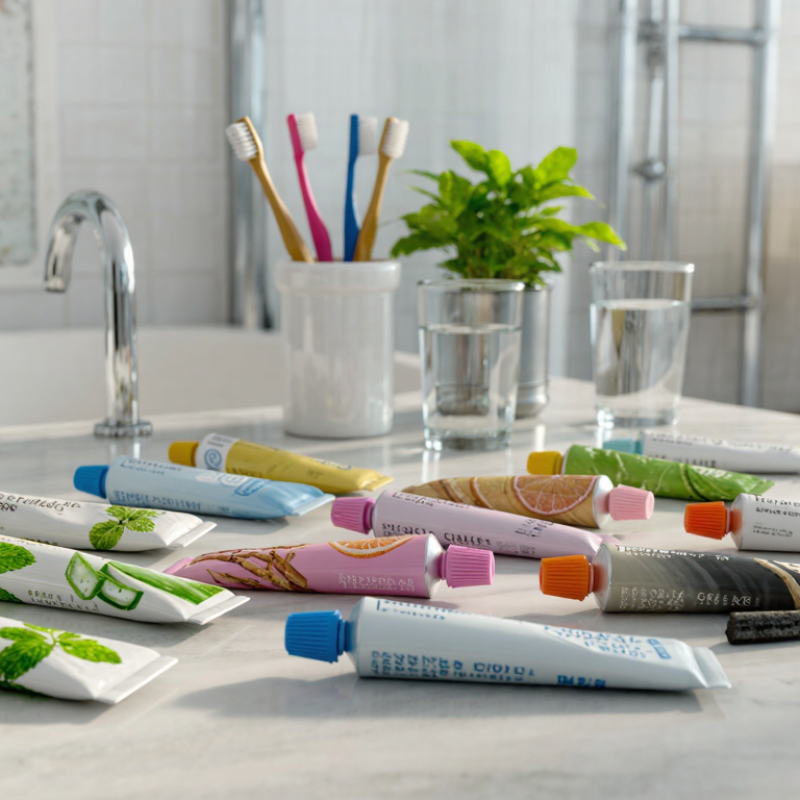
Private label toothpaste serves different consumer needs, climates, and retail channels. Global buyers commonly assess ten categories: fluoride, fluoride-free, whitening, sensitivity care, gum care, enamel care, children’s, herbal, low-foam, and mineral-based toothpaste. Each category needs a clear purpose. A whitening formula should avoid exaggerated promises. A children’s formula should match the target age group and local labeling rules.
Fluoride toothpaste remains important in many markets, but permitted ingredients and concentration limits can vary. Fluoride-free options may suit specific consumer preferences. Sensitivity and gum-care products require careful wording, because cosmetic positioning cannot replace professional treatment. Herbal formulas need documented ingredient quality, stable flavor, and consistent color. Mineral-based formulas may attract natural-product buyers, yet “natural” does not automatically mean safer or more effective.
Buyers should request ingredient specifications, microbiological testing, stability data, packaging compatibility, and batch traceability. Small details matter. A cap that leaks during humid shipping can damage an otherwise reliable product. Flavor strength also deserves testing across regions; a cool mint profile may feel harsh in some markets. Some formulas appear excellent on paper but lose texture after storage. That is where supplier review becomes essential. I would not approve a category from samples alone. Local compliance checks, pilot orders, and consumer feedback can reveal weaknesses before large production. No category fits every market perfectly.
Common categories include fluoride, fluoride-free, whitening, sensitivity care, gum care, enamel care, children’s, herbal, low-foam, and mineral-based toothpaste. Each formula needs a clear consumer purpose.
Check permitted ingredients and concentration limits in each target market. Request ingredient specifications and regulatory documentation. Requirements can vary widely.
No. It may suit specific preferences or product positioning. Buyers should avoid suggesting that fluoride-free toothpaste is universally better. Local review remains important.
Use mild flavors, gentle formulas, and easy-to-squeeze tubes. Provide clear age guidance. Young children may swallow more toothpaste than expected. Safety testing matters.
Claims should remain careful and realistic. Cosmetic wording cannot replace professional treatment. Whitening toothpaste should avoid exaggerated promises. Sensitive teeth may need clinical advice.
A balanced flavor, comfortable foam, and 100–150 gram packaging are useful. Bilingual labels may reduce confusion. Translation alone is not enough.
Request ingredient quality records, allergen information, and stability data. “Natural” does not automatically mean safer or more effective. Vegan checks should include adhesives and flavor systems.
Samples cannot reveal every weakness. Some formulas lose texture after storage. A leaking cap can damage products during humid shipping. Pilot orders and family testing may expose messy packaging or weak flavor acceptance. I would not approve a category from samples alone.
Private Label Toothpaste offers global buyers a flexible way to develop oral-care products for different consumer needs and market segments. Key categories include cavity protection, whitening, and sensitive-teeth formulas, along with herbal, natural, organic, and charcoal options. These product types can be tailored with different active ingredients, flavors, textures, and positioning to meet regional preferences and target specific customer groups.
The market also includes children’s, family, premium, and vegan toothpaste options, allowing buyers to build a diverse and competitive product portfolio. When selecting products, global buyers should carefully evaluate ingredient documentation, quality control, safety testing, labeling requirements, packaging durability, language needs, and environmental considerations. A reliable supplier should demonstrate consistent production capacity, transparent communication, customization expertise, and the ability to support compliance across intended markets. By balancing product function, consumer demand, packaging design, and regulatory readiness, buyers can create toothpaste lines that are practical, appealing, and suitable for international distribution.