Expert articles on custom formulation, regulatory trends, private label manufacturing, and global cosmetic innovations.
A Private Label Bath Bomb is a ready-made or customized bath product sold under your own brand name. The manufacturer usually develops the formula, presses the mixture, dries each piece, and prepares it for packaging. You choose the scent, color, shape, weight, and presentation. Your logo then becomes the customer’s main point of recognition.
The process begins with a clear product brief. It should define fragrance strength, skin-feel expectations, ingredients, packaging materials, and target customers. A reliable supplier should provide ingredient documentation, batch details, safety guidance, and samples before full production. Never judge quality from photographs alone. Hold the bath bomb, check its scent, and watch how it dissolves in warm water. Does it fizz evenly? Does the color stain the tub? Does the fragrance become unpleasant after five minutes? Small details can affect repeat purchases.
Manufacturers may offer stock formulas or develop a custom version. Stock options usually reduce cost and shorten lead times. Custom formulas provide stronger brand differentiation but require more testing and communication. Neither option is automatically better. The right choice depends on your budget, market position, and quality standards. Clear labeling matters, too. Claims should remain accurate, readable, and supported by available product information. A beautiful package cannot repair a weak formula. In practice, private labeling works best as a partnership, not a shortcut. Suppliers handle production expertise, while your brand remains responsible for thoughtful positioning and customer trust.
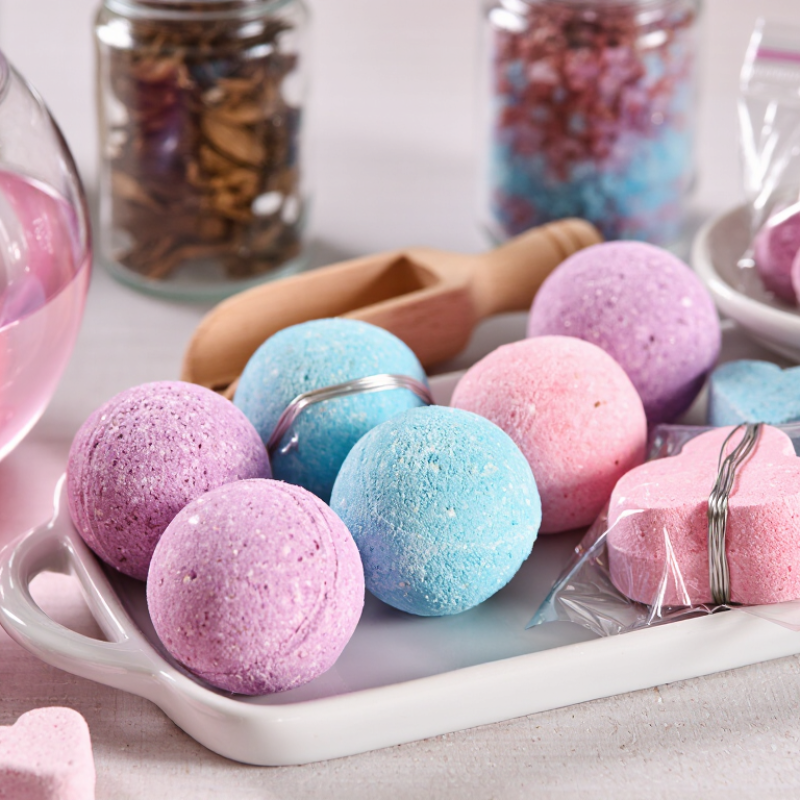
A private label bath bomb is a ready-made or customized bath product manufactured by one company and sold under another company’s label.
The manufacturer usually handles formulation, mixing, molding, drying, and quality checks. The seller chooses the product’s appearance and market presentation.
In practical manufacturing, the process often begins with a product brief. It may specify fragrance, color, size, shape, packaging, and target skin feel.
Common ingredients include sodium bicarbonate, citric acid, mineral salts, fragrance, and cosmetic colorants. The factory may offer an existing formula or adjust one for a specific order. Small changes matter. A stronger fragrance can affect comfort, while extra oil may reduce fizzing.
Quality control should include ingredient records, moisture checks, packaging tests, and batch identification.
A reliable supplier should explain how products are stored and tested before shipment. Labels should provide accurate ingredient information and suitable use instructions. Local cosmetic requirements also need attention.
The process is not perfectly predictable.
Humidity can make bath bombs crumble or activate early. Color may look different under store lighting. A sample can perform well, yet a larger batch may need adjustment.
Careful sampling, written specifications, and clear communication help reduce these problems. The seller remains responsible for checking whether the finished product matches its claims, packaging, and intended customer use.
A private label bath bomb is a ready-made or custom-formulated product sold under your own label. Manufacturing begins with a product brief. It defines the bomb’s size, scent, color, shape, skin-feel, packaging, and target price. A qualified manufacturer then reviews ingredient safety, fragrance limits, allergen information, and regional labeling requirements. Clear documentation matters.
The formula usually combines sodium bicarbonate, citric acid, mineral salts, binders, colorants, and fragrance. The dry ingredients are carefully sifted and blended for even distribution. Liquid components are added slowly. Too much moisture can start the fizzing reaction early. Too little can make the mixture crumble. The damp blend is pressed into molds under controlled pressure, then removed and dried in a low-humidity area.
The first sample may look excellent but fail during shipping. Testing should include hardness, dissolution time, scent performance, color dispersion, packaging fit, and batch consistency. Some formulas need several adjustments. That is normal. Manufacturers should keep production records and retain samples for quality checks. Labels must match the actual formula, including ingredients and usage directions. A reliable process connects formulation, pressing, drying, inspection, and packing without treating any step as an afterthought. Even a small change in fragrance or humidity can affect the final bath bomb.
A private label bath bomb is made by a contract manufacturer and sold under another company’s label. The process usually begins with a tested base formula. Sodium bicarbonate and citric acid create the familiar fizz. Kaolin clay, cornstarch, and plant oils can improve texture and skin feel. Fragrance and approved colorants shape the sensory experience. Water activity still matters. Poorly dried products may soften, crack, or lose performance during storage.
According to Grand View Research, the global bath bomb market was valued at approximately USD 1.9 billion in 2023, with continued growth projected through 2030. That demand increases interest in distinctive private label products. Customization may include scent strength, pastel or mineral colors, botanical powders, moisturizing oils, molded shapes, and dissolvable packaging. Manufacturers can also adjust bomb size, fizz duration, and minimum order quantities. Small changes matter. A dense sphere may sink quickly, while a lighter one floats and dissolves unevenly.
Ingredient selection requires more than attractive marketing language. Fragrance allergens, colorant limits, packaging compatibility, and stability testing should be reviewed for each target market. The Personal Care Products Council emphasizes ingredient transparency and responsible product safety practices across cosmetics and personal care. A manufacturer should provide batch records, safety documentation, and quality specifications. Customizing every feature sounds exciting, but it can weaken consistency and raise costs. In practice, one memorable scent and reliable performance may work better than five unfinished ideas. Even experienced teams sometimes overlook humidity during shipping. That mistake deserves attention.
What Is a Private Label Bath Bomb and How Does It Work?
A private label bath bomb is produced by a manufacturer and sold under another company’s identity. The formula may be ready-made or adjusted for scent, color, size, and skin-feel preferences. Packaging gives the product its first physical impression. A sturdy carton protects the bomb from humidity, while an inner wrap helps preserve its shape and fragrance. Paper seals, molded inserts, and recyclable materials can also support a cleaner presentation.
Branding should feel consistent across the box, label, and online product page. A clear name, balanced colors, and readable type help customers understand the product quickly. Small details matter. A soft-touch carton may suggest luxury, while kraft paper can communicate simplicity. However, attractive design cannot replace useful information. The label should clearly state ingredients, net quantity, directions, warnings, batch details, and responsible business contact information. Required details vary by market, so professional review is sensible.
I would test packaging in a warm, humid room before approving a production run. Check for fading, loose seals, crushed corners, and fragrance loss. The first mock-up often looks better on screen than in hand. That is worth noticing. A slightly uneven print may reveal a weak production process, but correcting every tiny flaw can also waste resources. Good private labeling depends on honest product claims, accurate records, and packaging that protects the bath bomb until use.
Private labeling allows a manufacturer to produce bath bombs that are sold under another business’s brand. The buyer typically selects the formula, fragrance, color, packaging, and label details, while the manufacturer handles production and fulfillment.
Typical planning benchmark: The workflow usually includes product selection, artwork preparation, compliance review, manufacturing, labeling, and packing. Actual timings vary according to formula complexity, order volume, packaging materials, and regional labeling requirements.
A private label bath bomb is made by a third-party manufacturer and sold under your own label. The supplier usually handles production, while you control the product concept, packaging, pricing, and sales strategy. To launch successfully, define a clear customer first. A relaxing lavender-style scent may suit adults seeking evening self-care, while bright colors can attract gift buyers. Request samples before placing a large order. Check the fizzing time, fragrance strength, color stability, and skin feel. Small details matter.
Tips: Ask for ingredient lists, batch information, minimum order quantities, and quality documents. Confirm that the manufacturer follows suitable hygiene and safety procedures. Review packaging carefully. It should protect the bath bombs from moisture and show accurate product information. Check applicable cosmetic labeling and safety requirements in every market where you plan to sell. Do not rely only on attractive product photos. They can hide weak packaging or uneven finishing.
Selling requires more than uploading a listing. Use clear photos that show size, texture, and packaging. Explain how customers should use the product and store it safely. Price each unit after calculating manufacturing, packaging, shipping, platform fees, and returns. Start with a manageable quantity and track customer comments. Some scents may sell poorly, even after careful research. That is part of the learning process. Adjust the product range, improve descriptions, and reorder only after reviewing real sales data.
It is a ready-made or custom-formulated bath bomb sold under your own label. A manufacturer handles production, while you choose product details and packaging.
The process starts with a product brief. Dry ingredients are sifted and blended. Liquid components are added slowly, then the mixture is pressed, dried, inspected, and packed.
Sodium bicarbonate and citric acid create the main fizzing reaction. Mineral salts, clay, starch, oils, fragrance, and approved colorants can change texture and performance.
Yes. You can adjust scent strength, colors, botanical powders, oils, size, shape, and fizz duration. Too many changes may reduce consistency and increase costs.
Excess moisture can start fizzing inside the mixture. Too little moisture can make the bath bomb crumble. Poor drying may cause cracks, softness, or weak performance.
Testing should check hardness, dissolution time, scent release, color dispersion, packaging fit, and batch consistency. Shipping tests matter too. A perfect sample can still fail in transit.
Packaging should protect the bath bomb from humidity, impact, and fragrance loss. A sturdy carton and inner wrap can help preserve its shape. Test seals carefully.
The label should match the actual formula. It should include ingredients, net quantity, directions, warnings, batch details, and responsible business contact information.
Place a sample in a warm, humid room. Check fading, loose seals, crushed corners, and scent loss. Screen images can hide problems. Physical testing is better.
A Private Label Bath Bomb is a bath product manufactured by a specialized supplier but sold under a retailer’s or entrepreneur’s own brand. This business model allows sellers to create a distinctive product line without building their own manufacturing facility. The process typically includes selecting a base formula, choosing colors, scents, shapes, and skin-friendly ingredients, and working with a manufacturer to produce and test the final bath bombs. Customization may also include moisturizing oils, botanical elements, appealing textures, and different size options.
Packaging and labeling play an important role in presenting the product professionally. Sellers can develop their own logo, package design, ingredient list, usage directions, product claims, and required safety information while ensuring the label is accurate and suitable for the intended market. To launch successfully, businesses should identify their target customers, calculate costs, order samples, confirm product quality, and prepare a clear sales strategy. Products can then be introduced through online stores, social media, gift shops, or other suitable retail channels.