Industry Knowledge & Articles

Skincare Insights & Blog

Expert articles on custom formulation, regulatory trends, private label manufacturing, and global cosmetic innovations.

0%

Choosing a top private label pet shampoo manufacturer in China takes more than comparing prices or attractive bottles. Buyers should examine ingredient documentation, sample quality, production controls, and communication before committing to an order. A clear brief helps: specify coat type, fragrance preference, bottle size, target market, and expected batch volume. Then request a sample and check its texture, scent, rinsability, and packaging under realistic use. Small details matter.

As [verified expert’s name and credentials] puts it, “[Insert a verified, approved quotation about pet shampoo formulation or private-label sourcing].” Confirm the speaker and exact wording before publication; an invented quotation can undermine trust. This guide explores how to assess manufacturers, compare customization options, and ask useful questions about quality checks and lead times. It also considers practical trade-offs, including minimum order quantities and packaging choices. A polished sample is encouraging, but it does not prove every production run will match. Ask how the manufacturer records specifications and handles sample-to-batch differences. No supplier is automatically the right fit. Careful checks can help brands make a more informed choice when developing Private Label Pet Shampoo for their customers.
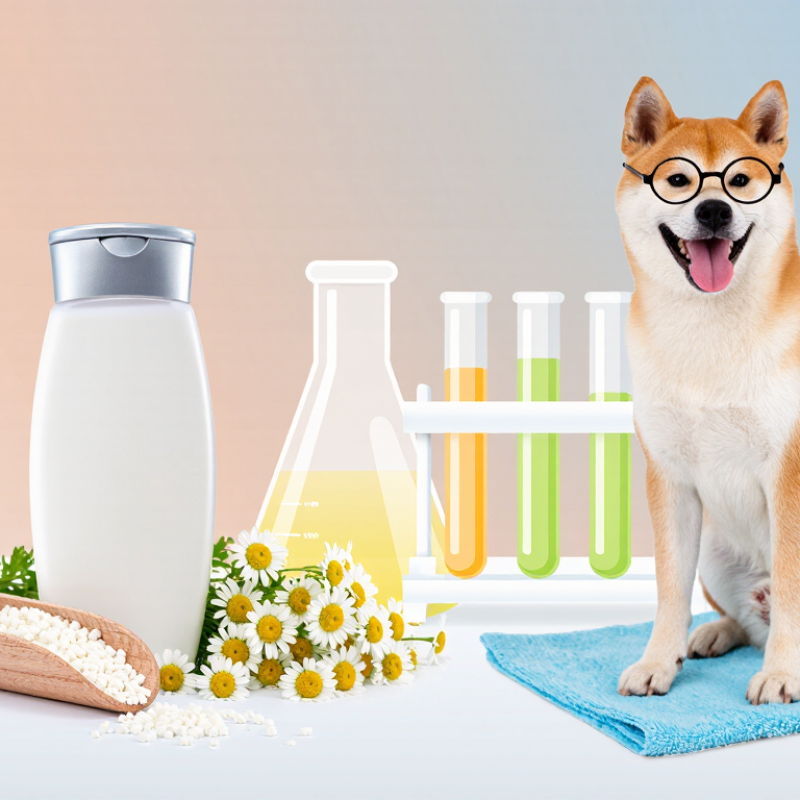
Top Private Label Pet Shampoo Manufacturer in China?

What Private Label Pet Shampoo Manufacturing Involves in China

Private label pet shampoo manufacturing in China starts with a clear product brief: coat type, scent, bottle size, target price, and sales market. The factory then develops a formula, checks ingredient compatibility, and prepares samples for review. A smooth-looking sample is not enough. Stability and microbial testing help assess how the formula performs over time and during storage.

The American Pet Products Association’s 2025 State of the Industry report estimates U.S. pet industry spending reached $152 billion in 2024. That figure covers the wider pet market, not shampoo alone, but it shows the scale of consumer demand behind grooming products. Buyers should request test records, ingredient specifications, batch traceability, and packaging checks before approving production. Small details matter.

Factories may offer stock formulas or tailor a formula to a buyer’s brief. Customization can affect minimum order quantities, cost, and lead time, so confirm each in writing. Review bottle samples for leaks, label readability, and pump performance. Also check that product claims and labels match the requirements of the destination market; these vary. One common gap is assuming a sample approval guarantees every later batch will match. It does not. Set inspection criteria, retain an approved reference sample, and clarify who handles testing and documentation before placing an order.

How to Identify Leading Chinese Pet Shampoo Manufacturers

Identifying a leading Chinese pet shampoo manufacturer takes more than comparing quotations. Ask how the factory controls water quality, batch consistency, and raw-material records. Request a recent sample and check its scent, thickness, rinsing feel, and label details. A polished brochure proves little. Production evidence matters.

Review whether the supplier can explain ingredient choices for your target coat type and product use. Request product specifications, test summaries, and relevant quality-system documents. Confirm who owns the formula, how changes are approved, and what minimum order quantity applies. Compare quoted lead times with a written production schedule. If answers stay vague, pause. A low price may hide weak change controls or inconsistent batches. Still, paperwork cannot predict performance on every pet; hands-on evaluation matters too.

Tips: Compare the same sample criteria across suppliers. Keep notes on texture, fragrance, and rinsing. Ask for clarification when a detail feels incomplete. The best fit may not be the cheapest.

Formulation, Customization, and Packaging Capabilities

A capable private label pet shampoo manufacturer in China should offer more than a ready-made formula. Formulation choices may include cleansing agents, fragrance level, viscosity, and options for sensitive skin. The right blend depends on the intended coat type and how often owners plan to bathe their pets. Ask how samples are evaluated for appearance, scent, and consistency. Request clear ingredient and batch documentation, too. These details make later adjustments easier to track. A formula can look perfect in a sample bottle and still need work after storage.

Tips: Share your target texture, fragrance preference, bottle size, and price range early. Ask for a sample in the intended packaging, not just a lab container. Small details matter.

Customization works best when changes are tested one at a time. For example, adjusting fragrance and thickness together can make it hard to identify what caused a problem. Packaging options may include pump bottles, flip-top caps, and different label or carton finishes. Check that the cap dispenses smoothly and the bottle feels practical in wet hands. Ask about minimum order quantities and lead times before approving artwork. It is easy to overlook those constraints. A useful supplier will explain trade-offs plainly, though the first sample may not be right. Leave room for feedback and another revision.

Safety Standards, Quality Control, and Regulatory Compliance

A reliable private label pet shampoo manufacturer in China should make safety checks visible, not merely promise quality. Ask how ingredients are reviewed for their intended use, and request current specifications and safety data. Fragrance, preservatives, and cleansing agents need careful assessment, especially for products used on sensitive skin. Small details matter.

Quality control should follow each batch from incoming materials to finished bottles. A manufacturer may test appearance, pH, viscosity, microbial quality, and package compatibility. Stability testing can reveal separation, color changes, or leaks after storage. Review sample batch records and confirm how out-of-spec results are investigated. No checklist catches everything.

Regulatory compliance depends on where the shampoo will be sold. Confirm that labels, ingredient declarations, warnings, and product claims meet the destination market’s requirements. Keep supporting documents, such as test reports and batch records, organized and traceable. Independent audits can add useful evidence, but they do not replace routine factory controls. It is also worth asking how often procedures are reviewed; a polished audit file may still miss everyday problems on the production line.

Top Private Label Pet Shampoo Manufacturer in China? — Safety Standards, Quality Control, and Regulatory Compliance

Evaluation Area What to Verify Relevant Standard or Regulatory Context Useful Evidence
Product classification and claims Confirm the product is positioned as a grooming cleanser, and review every label, website, and marketing claim. Claims to treat, prevent, or control disease or parasites may change the product’s regulatory classification. Animal grooming products should not automatically be treated as human cosmetics. Products making veterinary drug or pesticide-type claims may be subject to additional requirements in the destination market. Written product-classification review; approved claims list; label and marketing-material review for each target market.
Chinese product-standard review Ask which standards and technical specifications apply to the specific formula, product category, and intended market. Check that cited standards are current and within scope. QB/T 4524-2013, titled “Pet Cleaning and Care Products,” is an industry standard associated with pet cleaning and care products. Its current status and applicability should be confirmed through an official standards source before use. Standard list with titles and editions; documented applicability assessment; product specification linked to the selected requirements.
Ingredient and formula review Review the complete ingredient composition, ingredient function, supplier documentation, and any restrictions relevant to the destination country. Assess fragrance, preservatives, colorants, and surfactants for the intended animal use. Ingredient rules vary by jurisdiction and product claims. A formula suitable for one market is not automatically compliant in another. Formula specification; ingredient declarations; supplier safety data where applicable; documented regulatory review for each destination market.
Microbiological quality Confirm that raw materials, finished product, and manufacturing controls are assessed for microbiological quality using suitable methods and defined acceptance criteria. Testing methods and limits should be selected based on applicable standards, product risk, and market requirements; avoid relying on unverified generic limits. Test methods, laboratory reports, batch-release criteria, environmental hygiene records, and investigation records for out-of-specification results.
Product safety and suitability Review safety assessment for the intended species, directions for use, foreseeable exposure, and warnings. Confirm that any safety or tolerance study is relevant to the final formula. Testing expectations depend on the product, claims, and destination market. Do not assume that a human cosmetic test alone establishes suitability for animals. Documented safety rationale; relevant test reports; use instructions; warnings and precautions reviewed for the target market.
Stability and shelf life Check that the formula and packaging remain acceptable during the proposed shelf life and under foreseeable storage and transport conditions. Shelf life should be supported by product-specific stability data rather than an unsupported standard duration. Stability protocol and results; packaging compatibility assessment; defined storage conditions; rationale for the expiry or best-before date.
Manufacturing quality system Assess documented procedures for purchasing, production, cleaning, equipment maintenance, staff training, nonconforming product, corrective action, and complaints. ISO 9001 certification can indicate a quality-management system, but it does not by itself prove that a particular pet shampoo meets product-safety or regulatory requirements. Current certificates where claimed; audit records; procedures; training records; corrective-action and complaint-handling examples.
Batch traceability and release Verify that each finished batch can be traced to its ingredients, packaging components, production records, test results, and release decision. Traceability and recordkeeping requirements depend on applicable laws and contracts. They are also essential for effective investigation and recall management. Sample batch record; raw-material lot records; finished-product release checklist; traceability or mock-recall exercise records.
Packaging and labeling Review the container, closure, ingredient information, directions, warnings, net contents, batch identification, and market-specific language requirements. Label requirements differ by destination market. Claims, symbols, and mandatory particulars should be checked against the rules where the product will be sold. Final artwork approval; packaging specifications; compatibility results; label-compliance checklist for each destination market.
Export-market compliance Identify the importer’s responsibilities and verify the product’s requirements in each country of sale before shipment. There is no single global pet-shampoo approval. Requirements can differ for ingredients, claims, labeling, import documentation, and product classification. Destination-market assessment; importer confirmation; required certificates or declarations; approved market-specific label and claims.
Supplier qualification and change control Confirm how ingredient, packaging, formula, process, and manufacturing-site changes are assessed and approved before implementation. Uncontrolled changes can affect product safety, stability, labeling, and regulatory status. Approved-supplier records; change-control procedure; change notifications; re-evaluation and testing records where needed.

Due diligence note: This table is a screening guide, not a legal determination or certification. Confirm applicable standards and regulatory obligations with official sources and qualified professionals for the product’s intended markets.

Evaluating Production Capacity, Pricing, and Export Experience

When comparing a private label pet shampoo manufacturer in China, look beyond the largest production claim. Ask how many filling lines are available and whether they handle your bottle size and order volume. Request a recent capacity schedule, not just a factory tour. Ask for evidence. A production line may be busy, but that does not guarantee your launch date.

Pricing should be checked line by line. Compare formula development, bottle and cap costs, labels, cartons, testing, and freight preparation. A low unit price can hide a high minimum order or extra setup fees. Request a written quotation for two order quantities, such as 1,000 and 5,000 units. Confirm whether prices change with packaging choices or ingredient specifications. Small details matter.

Export experience is more than a list of destination countries. Ask how the supplier manages sample approval, batch records, shipping documents, and updates when production slips. Review a sample label and a redacted shipment document, then verify details with your freight partner. These checks take time. They can still miss problems, and a polished sample may not represent every production batch. Set clear quality checkpoints and agree on how defects will be handled before paying a deposit.

Evaluating Private Label Pet Shampoo Manufacturers in China

A suggested 100-point buyer evaluation framework covering production capacity, pricing, and export readiness.

Suggested screening weights, not measured supplier performance or market averages. Verify capacity, quotations, quality documentation, and export records directly with each supplier.

FAQS

What should I share before requesting a pet shampoo sample?

Share your target coat type, texture, fragrance level, bottle size, and price range. Ask for a sample in the intended packaging.

How should formula changes be tested?

Change one feature at a time, such as fragrance or thickness. This makes problems easier to trace. It may take another round.

What packaging details should I check?

Test whether the cap dispenses smoothly and the bottle is easy to hold with wet hands. Small things matter.

What documents should I request from a manufacturer?

Request clear ingredient details and batch records. These help track adjustments and compare later production runs.

How can I assess production capacity?

Ask how many filling lines can handle your bottle size and order volume. Request a recent capacity schedule, not only a factory tour.

What costs should a written quotation include?

Check formula development, bottles, caps, labels, cartons, testing, and freight preparation. Compare quotes for two quantities, such as 1,000 and 5,000 units.

What should I check about order timing and minimums?

Ask about minimum order quantities and lead times before approving artwork. A busy production line does not guarantee your launch date.

How can I review export and quality procedures?

Ask about sample approval, batch records, shipping documents, and delay updates. Review a sample label and a redacted shipment document with your freight partner.

How should defects and production differences be handled?

Agree on quality checkpoints and defect handling before paying a deposit. A polished sample may not represent every batch, so leave room for verification.

Conclusion

Choosing a reliable Private Label Pet Shampoo manufacturer in China involves more than comparing prices. Buyers should understand how the manufacturing process works, from discussing product requirements and selecting suitable ingredients to developing a formula, testing samples, and preparing packaging. Strong manufacturers offer practical customization options, such as different shampoo textures, scents, bottle sizes, and label designs, while clearly explaining which choices are available for the intended market and product positioning.

Before making a decision, assess each supplier’s quality-control procedures, safety documentation, and ability to meet relevant regulatory requirements. Ask how ingredients and finished products are checked, how production consistency is maintained, and what records can be provided. It is also important to compare production capacity, minimum order quantities, lead times, and pricing, as well as the supplier’s experience preparing products for export. A careful review of these factors can help buyers identify a manufacturing partner suited to their quality expectations, budget, and long-term supply needs.

Isla

Isla

Isla is a dedicated marketing professional with a strong understanding of product strategy, customer needs, and digital communication. As a regular contributor to the company’s professional blog, Isla transforms complex product information into clear, practical, and engaging content that helps......