Private Label Body Butter is moving from a niche indulgence toward a practical, premium body-care choice. Consumers want richer hydration, comforting textures, and ingredients they can understand. The opportunity is real, but supplier selection requires more than attractive packaging.
McKinsey’s The Beauty Market in 2023 projects the global beauty industry could approach $580 billion by 2027. Its analysis also highlights premiumization, wellness, and digital discovery as continuing growth forces. Euromonitor International similarly identifies multifunctional body care and ingredient transparency as important consumer trends. These findings support demand for body butter products with clear benefits, reliable sourcing, and distinctive sensory experiences.
Supplier quality remains the difficult part.
A strong 2026 supplier should demonstrate documented manufacturing controls, stable batch performance, and practical formulation expertise. Look for evidence of GMP-aligned production, microbial testing, stability testing, and traceable raw materials. Certifications should be verified, not simply displayed in a product brochure. The Personal Care Products Council and ISO 22716 provide useful references for responsible cosmetic manufacturing practices.
Product details matter on the factory floor. A smooth butter should spread without excessive drag. A jar should survive transport without leaking. Fragrance should remain balanced after storage. Small failures become expensive returns.
This guide examines leading Private Label Body Butter suppliers through formulation capability, minimum order quantities, customization, packaging, compliance support, and delivery reliability. Some supplier claims may look impressive but deserve closer questioning. Pricing alone is not a dependable quality signal. A thoughtful buyer should request samples, review technical documents, and test the finished product under realistic conditions before committing to a long-term partnership.
What Is Private Label Body Butter and Why Does It Matter in 2026?
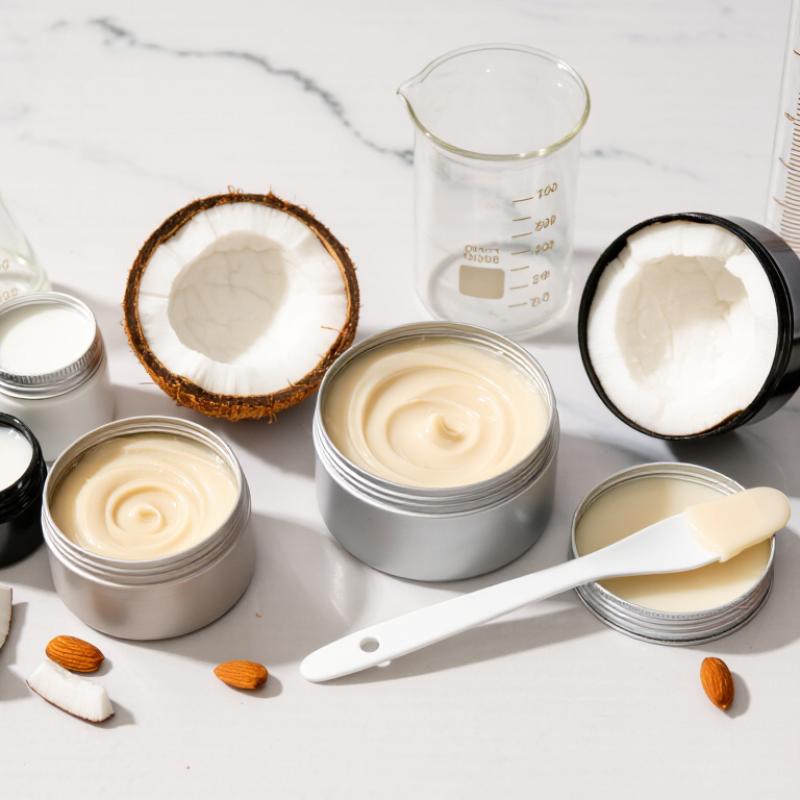
Private label body butter is a ready-formulated moisturizer sold under your own brand name. It usually contains rich ingredients, such as shea butter, plant oils, and vitamin E. Suppliers may offer standard formulas or adjust texture, fragrance, and packaging. In practice, texture matters as much as the ingredient list. A butter that feels greasy may stay untouched on a bathroom shelf. A stable, quick-absorbing formula feels more suitable for daily use.
Why does it matter in 2026? Customers now inspect ingredient transparency, product performance, and responsible packaging. A dependable supplier should provide full ingredient details, batch records, safety documents, and stability testing. Ask how the formula performs after heat exposure and repeated opening. A sample may feel excellent on day one, yet separate after several weeks. That mistake can become expensive.
Tips: Request several samples and test them on dry skin. Check the scent after ten minutes. Review the ingredient list with a qualified cosmetic professional. Confirm minimum order quantities, lead times, filling standards, and label accuracy. Avoid unsupported claims such as “heals” or “chemical-free.” Those phrases create confusion and may damage trust. Supplier selection should include communication quality, not only price. A low quote can hide weak documentation or inconsistent batches. I would also leave room for revision, because the first formula is rarely perfect.
How to Evaluate Private Label Body Butter Suppliers
When evaluating private label body butter suppliers for 2026, inspect evidence before comparing prices. McKinsey’s 2023 beauty-market analysis projects the global beauty market could reach about $580 billion by 2027. Growth creates opportunity, but it also attracts inexperienced manufacturers. Ask for complete INCI ingredient lists, certificates of analysis, microbiological results, and stability-test records. A reliable supplier should explain testing conditions clearly, not simply send a polished brochure.
Request pilot samples from at least three production batches. Compare texture after heat exposure, cold storage, and repeated opening. Check whether oils separate, fragrance changes, or the jar becomes difficult to use. Confirm batch traceability, minimum order quantities, production lead times, filling accuracy, and packaging compatibility. The Personal Care Products Council reports that safety substantiation is central to responsible cosmetic production. However, documents alone do not prove consistent manufacturing. An on-site or third-party audit may reveal weak sanitation controls. I have found that vague answers usually deserve more attention, not less.
Tips: Build a supplier scorecard before requesting quotations. Give quality 40%, compliance 25%, consistency 20%, and price 15%. Require written answers for every missing document. Verify claims such as “natural,” “organic,” or “hypoallergenic” against supporting evidence and the destination market’s rules. One practical test is simple: ask the supplier to explain a failed batch and its corrective action. Honest manufacturers usually describe the problem, the cause, and the preventive step. Suppliers that promise perfection may be less trustworthy.
Top Supplier Types for Different Brand and Product Needs
In 2026, private label body butter suppliers serve very different brand needs. The right supplier depends on your formula, budget, packaging goals, and launch schedule. Stock-formula suppliers suit new brands needing faster production and lower minimum orders. They usually offer tested base formulas with limited customization. Custom-development suppliers work better for brands seeking unique textures, scents, or active ingredients. Their development process takes longer and often requires higher order volumes. Contract manufacturers with advanced filling equipment can support larger launches and complex packaging. Some assumptions fail. A low minimum order does not always mean lower total costs.
Tips: Match the supplier type to your product plan, not only the quoted unit price. Request samples from several production batches when possible. Compare texture, absorption, fragrance strength, color stability, and container compatibility. Ask for ingredient specifications, testing records, production lead times, and quality-control procedures. Clear answers usually indicate stronger operational experience.
Brands targeting sensitive-skin customers should examine fragrance options and ingredient transparency carefully. Suppliers experienced with botanical formulas may provide useful formulation guidance, but natural ingredients can vary between harvests. That variation deserves attention. For premium positioning, evaluate custom packaging support, batch consistency, and pilot-run flexibility. For seasonal products, confirm capacity before approving artwork or marketing dates. An experienced supplier should explain what it can verify, what remains uncertain, and how problems are handled. This honesty is often more valuable than polished sales language.
Key Services, Formulation Options, and Compliance Standards
In 2026, leading private label body butter suppliers offer more than filling and labeling. They support product development from brief to production. Useful services include texture testing, fragrance selection, packaging coordination, pilot batches, and production scaling. A reliable supplier should explain minimum order quantities, lead times, batch records, and quality controls clearly. Hidden details matter.
Formulation options may include shea butter, cocoa butter, plant oils, fragrance-free bases, and sensitive-skin versions. Suppliers can adjust firmness, absorption, scent strength, and color. However, a richer formula is not always better. Heavy oils may feel uncomfortable in humid climates. Fragrance can also irritate some users. Stability testing, preservative checks, compatibility testing, and microbial analysis should guide decisions. I have learned that attractive samples sometimes perform poorly after heat exposure. Testing must continue.
Tips: Request a sample, ingredient list, INCI format, safety documentation, and stability results before approval. Confirm that manufacturing follows appropriate GMP procedures, such as ISO 22716 principles. Ask how the supplier verifies raw materials and manages batch traceability. Product claims should match evidence, not marketing ambition. “Deeply nourishing” may be acceptable, but medical or therapeutic claims require greater scrutiny. Check the destination market’s labeling, allergen, packaging, and notification requirements. A compliance review feels slow, but one missing detail can delay launch.
2026 Top Private Label Body Butter Suppliers: Services, Formulation Options & Compliance Standards
This chart compares core compliance checkpoints that private label body butter suppliers should be prepared to support in the United States and European Union. Requirements may vary by product claims, ingredients, exemptions, and market placement.
Formulation options
Common options include shea butter, cocoa butter, mango butter, botanical oils, fragrance-free bases, and essential-oil versions.
Key supplier services
Typical services include custom formulation, sample development, stability testing, packaging sourcing, filling, labeling, and batch documentation.
How to evaluate suppliers
Verify safety substantiation, ingredient documentation, GMP controls, product records, labeling support, and market-specific regulatory assistance.
How to Choose the Right Supplier for Your Body Butter Brand
Choosing the right private label body butter supplier requires more than comparing prices.
Start with product evidence, not catalog photos. Request a small pilot batch, full ingredient specifications, allergen details, and stability-testing records. A rich texture may feel impressive on day one, yet separate after weeks of heat exposure. Check whether the supplier tests viscosity, microbial safety, packaging compatibility, and shelf life under realistic conditions.
Market context matters.
McKinsey’s The State of Fashion: Beauty report projects the global beauty market could reach approximately $580 billion by 2027, with annual growth near 6%. This expansion increases opportunity, but also supplier pressure. Ask about monthly capacity, lead times, minimum order quantities, and backup raw-material sources. ISO 22716-based manufacturing controls can indicate disciplined production, although certification alone does not guarantee a suitable formula. Review recent batch records when possible. A polished sample can still hide weak quality consistency.
Tips:
Compare three suppliers using the same brief. Test the butter on dry skin, not only your hand. Confirm INCI labeling, claims support, packaging rules, and required market documentation before signing. Ask how complaints are investigated. The answer reveals more than a sales presentation. Also, leave room for uncertainty. Fragrance preferences, climate, and customer skin needs can change. A supplier that welcomes reformulation may be more valuable than one offering the lowest quote.
FAQS
Stock-formula suppliers usually offer tested bases, lower minimum orders, and faster production. Customization may remain limited. Not always cheaper.
Choose custom development for unusual textures, scents, or active ingredients. Expect longer testing, higher development costs, and larger orders. The timeline can stretch.
Compare minimum orders, packaging costs, testing fees, shipping, and possible rework. A low unit price can hide higher total costs. I might underestimate this.
Request stability results, preservative checks, microbial analysis, and packaging compatibility tests. Ask how samples perform after heat exposure. Attractive samples can still fail later.
Suppliers may adjust butter types, plant oils, firmness, absorption, fragrance strength, and color. Rich formulas may feel heavy in humid climates. Lighter can be better.
Review fragrance options, ingredient transparency, allergen details, and fragrance-free alternatives. Botanical ingredients may vary between harvests. That variation matters.
Ask for records from several production batches, lead times, quality procedures, and traceability details. Check whether the supplier explains uncertainties honestly. Clear answers help.
Request an INCI ingredient list, safety documents, and labeling requirements for the destination market. Confirm suitable GMP procedures, including ISO 22716 principles. Claims need evidence.
Conclusion
In 2026, Private Label Body Butter offers brands an efficient way to create distinctive, high-quality skincare products without managing every stage of manufacturing internally. A reliable supplier can support product development from concept and ingredient selection to packaging, labeling, and production. When evaluating potential partners, brands should consider formulation expertise, minimum order quantities, production capacity, quality-control procedures, lead times, transparent pricing, and communication standards.
Different supplier types may suit emerging businesses, established retailers, or brands seeking highly customized formulas. Important services can include ready-made and bespoke formulations, fragrance and texture options, sample development, sustainable packaging support, stability testing, and documentation for applicable cosmetic requirements. The right supplier should demonstrate consistent manufacturing practices, clear ingredient information, responsible sourcing, and compliance with the regulations of each target market. By matching a supplier’s capabilities, flexibility, and service model with their brand goals, businesses can build a dependable body butter line that delivers quality, consistency, and a strong customer experience.