Expert articles on custom formulation, regulatory trends, private label manufacturing, and global cosmetic innovations.
Private Label Pet Paw Balm is a balm produced by a manufacturer and sold under a retailer’s or brand owner’s name. The formula may help soften dry pads and protect paws from ordinary environmental stress. It is not a substitute for checking paws, cleaning away grit, or seeking veterinary care when a paw is injured. Small details matter. A waxy texture can leave a noticeable film on a dog’s pads, while a strong scent may bother sensitive pets.
Choosing a product begins with its intended use, ingredient information, and directions. Ask the manufacturer how the balm is formulated, tested, and packaged. Review whether its texture suits the climate and the animals who will use it. Do not assume that “natural” means harmless, or that one formula suits every pet. That deserves a second look.
Veterinary dermatologist Dr. Karen Moriello is a relevant expert on animal skin health. A practical editorial paraphrase of the skin-barrier principle is: “A paw balm should support routine care, not replace careful observation.” This is not presented as her verbatim quotation. That distinction matters. A responsible private-label plan should rely on documented product information and qualified veterinary review, rather than attractive claims alone. In this guide, we’ll explain what Private Label Pet Paw Balm is, how it is developed, and which questions help brands assess a product before offering it to pet owners. We’ll also note a limitation: a balm cannot solve every cause of dry or irritated paws.
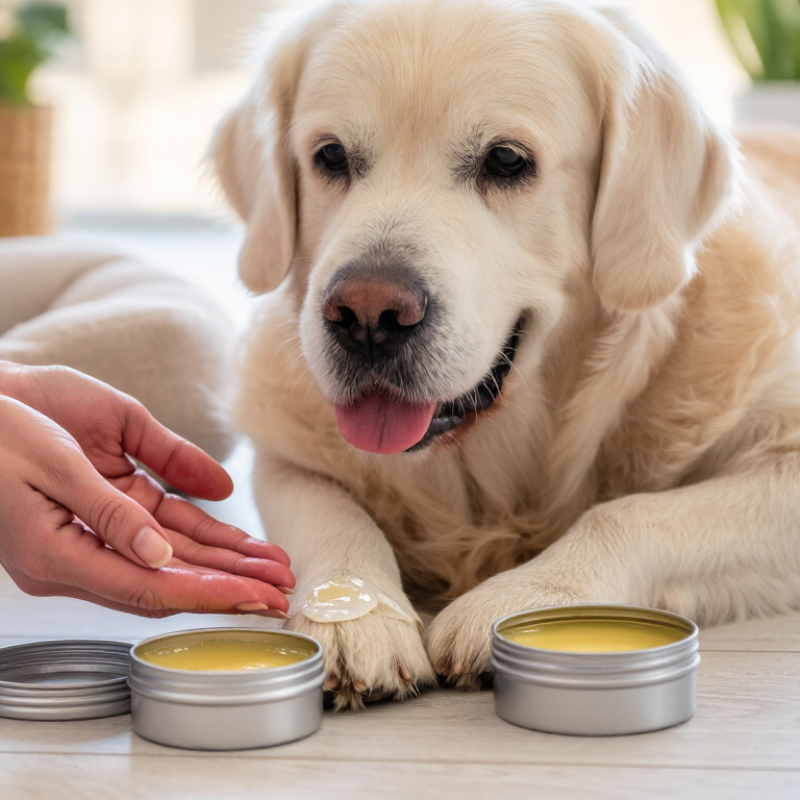
Private label pet paw balm is made by a manufacturer and sold under another business’s name. The seller may choose packaging, label design, and sometimes product details. The balm itself is intended to moisturize dry paw pads and help protect them from everyday rough surfaces. It is not a treatment for wounds or persistent skin problems.
A formula may contain oils, waxes, or plant-based butters. The exact ingredients matter. Pet owners may notice a balm’s texture when scooping a small amount from a tin: it should spread without feeling gritty or leaving a heavy film. Small details count. Clear directions and an easy-to-read ingredient list help people make informed choices.
Since pets can lick their paws, avoid assuming that “natural” means harmless if swallowed. A seller should ask the manufacturer for ingredient information and appropriate product testing, rather than relying on vague claims. The right balm can vary between pets, and even a well-made product may not suit every animal.
If pads are cracked, bleeding, swollen, or repeatedly irritated, a veterinarian can help identify the cause.
What Is Private Label Pet Paw Balm?
Common Ingredients and Their Functions
Private-label pet paw balm is a paw-care formula produced by a manufacturer and sold under a retailer’s own label. Its ingredients usually create a protective coating and soften dry pads. The broader pet-care market is substantial: the American Pet Products Association’s 2025 State of the Industry Report estimates U.S. pet-industry spending reached $152 billion in 2024. That figure covers the whole industry, not paw balm alone.
Beeswax helps form a moisture-retaining barrier, while shea butter softens rough skin. Coconut oil can also act as an emollient, though pets may lick it off. Vitamin E is commonly included as an antioxidant and skin-conditioning ingredient; it should not be presented as a treatment for wounds. Formulas vary. Ingredient quality and concentration matter as much as the ingredient names. That distinction is easy to miss. For private-label products, manufacturers should assess ingredient suitability for animals and provide clear directions. Owners should check the full label, apply only as directed, and prevent excessive licking. Cracks, swelling, or limping warrant veterinary advice rather than balm alone.
What Is Private Label Pet Paw Balm?
How Private Label Paw Balm Is Developed
Private label paw balm is a product developed by a manufacturer for another business to sell under its own label. Development starts with the intended use: helping protect dry paw pads or moisturize rough skin. The texture matters. A balm should spread across a paw without feeling overly greasy, and its scent should not overwhelm pets or owners. The American Pet Products Association reported that 82 million U.S. households owned a pet in its 2023–2024 National Pet Owners Survey. That broad audience does not mean one formula suits every animal.
A development brief sets ingredient preferences, packaging, target price, and claims the product can support. Formulators then select ingredients and make small pilot batches. They assess texture, odor, melting behavior, and how consistently the balm fills a tin or tube. Stability checks help reveal changes during storage. Packaging needs practical testing, too: a lid that is hard to open with slippery fingers is a real flaw. Small details matter.
Before launch, manufacturers should document ingredient specifications, batch records, and quality checks. The APPA’s 2024 State of the Industry report estimated U.S. pet-industry spending at $147 billion in 2023, with $150.6 billion projected for 2024. This signals a large market, not proof of demand for any particular balm. Testing should also consider pets’ tendency to lick their paws; “natural” alone does not establish suitability. Some product decisions remain imperfect, so clear limits and careful review matter.
Private label pet paw balm is a ready-made or custom-developed formula sold under your own brand. Packaging choices shape how customers understand and use it.
The American Pet Products Association reported that U.S. pet industry spending reached $147 billion in 2023, in its 2024 State of the Industry report. That scale creates room for niche products, but clear product information still matters.
A compact tin may suit a small bag, while a squeeze tube can make measured application easier. Choose packaging that protects the balm from heat and closes securely after use.
Branding should make practical details easy to find: net weight, ingredients, directions, and storage guidance. Customization can include balm texture, scent, package size, label finish, and color palette.
Keep claims specific and evidence-based. Avoid implying that a cosmetic balm treats an injury or medical condition. Before ordering a large production run, test samples for leaking, label readability, and how the balm feels in cool and warm conditions.
Some packaging looks polished but is awkward with greasy fingers. That deserves a second look.
Tips: Request a packaging sample and a full ingredient specification. Apply the balm, close the package, and carry it for several days. Check for residue, leaks, and confusing directions before approving the final design.
Private label pet paw balm is made by a supplier and sold under a retailer’s own label. The label alone does not tell you whether a balm suits your pet. Check the full ingredient list, intended species, directions, and expiry date. Look for clear information about product quality and contact details for the manufacturer. Be cautious of claims that a balm can treat infections or heal serious skin problems.
Use balm on clean, dry paws, and apply only a thin layer. Less is better. Supervise your pet afterward, since licking can lead to swallowing the product. Try a small amount first and watch for redness, itching, or discomfort. Avoid applying balm to deep cracks, bleeding skin, or swollen paws unless a veterinarian advises it. Human hand creams are not automatically safe for pets. If your pet limps or keeps licking a sore paw, seek veterinary advice rather than adding more balm. Even careful owners can miss a small cut between the toes. Check there in good light, especially after walks on hot pavement, ice, or rough paths.
A manufacturer develops it for another business to sell under its own label. It usually helps protect dry paw pads or soften rough skin.
Beeswax can form a moisture-retaining barrier. Shea butter and coconut oil can soften dry skin. Vitamin E is often used for conditioning and antioxidant purposes.
It should not be presented as a wound treatment. Cracks, swelling, or limping call for veterinary advice. Balm alone may not be enough.
A development brief sets ingredient preferences, packaging, price, and supportable product claims. Formulators then make small batches and assess texture, scent, and melting behavior.
It should spread without feeling overly greasy. A lid should be easy to open, even with slippery fingers. Small packaging details matter.
Manufacturers should document ingredient specifications, batch records, and quality checks. Stability checks can reveal changes during storage. Results still need careful review.
No. Ingredient suitability and concentration matter, and pets may lick their paws. “Natural” alone does not prove a formula is suitable.
Read the full label and follow its directions. Prevent excessive licking when possible. One formula may not suit every animal.
Private Label Pet Paw Balm is a customizable product designed to help moisturize and protect a pet’s paw pads. Formulas may include ingredients such as plant-based oils, waxes, and soothing emollients, each selected to support skin conditioning and create a comfortable protective layer. The precise ingredients and their proportions depend on the product’s intended use, texture, and customer preferences.
Developing a paw balm involves choosing suitable ingredients, refining the formula, and checking its consistency and usability. Packaging and branding can also be customized, with options for container style, label design, size, and scent. When choosing a balm, consider your pet’s needs and review the ingredient list, especially if your pet has sensitive skin or known allergies. Apply a small amount as directed, prevent excessive licking, and stop use if irritation occurs. Consult a veterinarian when you have concerns about your pet’s paws or a product’s suitability.